Immersive Sims
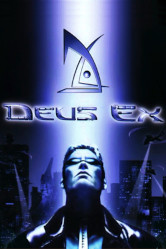
The year is 2052, the drugs, plague and terrorism are taking over the world. You play as JC Denton, the nano-augmented agent of UNATCO (United Nations Anti-Terrorist Coalition), who just graduated from the UNATCO Academy and is on his first real mission: interrogate the terrorist leader in the Statue of Liberty (and probably rescue a fellow agent, who was taken hostage).
Combat is kinda weird (and is more closer to the RPG-like approach to handle the combat), your shots are always inaccurate, unless you take your time and wait until the reticle becomes smaller. To mitigate that, you have to put your skill points on either Pistols or Rifles skills. Aside from typical firearms and melee weapons, you can use the non-lethal approach and use weapons like Riot Prod or Mini-Crossbow with tranquilizer darts. You can as well sneak past your enemies without even killing anyone.
But unlike the games of that time (and even modern games), it gives you the freedom of handling the objectives however you want, you can even fail secondary objectives and some primary objectives and it will not void your playthrough (it doesn't mean there aren't any softlocks).
The plot and level of writing are great (and some elements of the plot are oddly prophetic). Despite being mostly about silly conspiracy theories, the game managed to predict War on Terror and The Patriot Act.
The soundtrack is really great (its a tracker music!) and its often catchy (or atmospheric) and memorable.
Despite all its jank, I really consider Deus Ex to be a masterpiece.
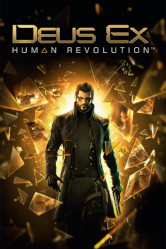
Its a prequel to the original game, which is set is 2027, where the world haven't been turned into a miserable place yet. You take the role of Sarif Industries' chief of security Adam Jensen, who gets severely injured during the attack on the laboratiories and has half of his body replaced with military-grade mechanical augmentations. During that raid, the lead scientists were kidnapped, including Jensen's girlfriend Megan.
The story is a big let down for me in Human Revolution, it seems to be more focused on Adam, rather than on everything that happens around him (there's nothing wrong with the concept, its just the execution isn't good, the NPCs were written as if Adam was a center of everybody's attention). Also the prequels lack one thing that is important to Deus Ex, which is real life conspiracy theories adapted into the game's plot. Sure, prequels have conspiracy theories, but they're not based off anything real.
The gameplay is... uhh... the combat is fine, though the lethal approach doesn't seem to be a good option, compared to non-lethal (since I've died pretty often), but its not the issue I have with DX:HR's gameplay, because the main issue of DX:HR's gameplay for me is the level design. Its not great, while the action-packed places are easy to navigate, the hubs feel like a confusing maze I don't feel comfortable to navigate in. As soon as I started the game, finished the tutorial levels and reached the hub, I immediately remembered why I stopped playing DX:HR in the first place.
Another small issues with DX:HR I have are very jerky NPC animations during dialogue and the artstyle (more specifically how the characters look, they all look like if Japanese people were tasked to design an American pedestrian).
Other than the combat (and finishing moves, punching bad guys in the face never stops being amusing), another good thing about DX:HR is the soundtrack. While ambients themselves aren't as memorable, they set the right atmosphere; and the combat music is really good.
Honestly, I can't get over Deus Ex: Human Revolution and start liking it the same way I like the original or DX:HR's sequel and I always had the mixed feeling about the game.
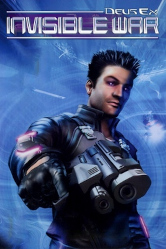
Its a direct sequel to the original game, set 20 years after the events of the original game. The world has suffered The Collapse, religions have merged into a single religion called The Order and everything is under control of WTO, who are trying to fix the world from the aftermath of The Collapse. You play as Alex D, a nano-augmented trainee at the Tarsus Academy, who got relocated from Chicago after a terrorist attack cause by The Order. Unfortunately for Alex, Seattle branch of Tarsus gets raided by The Order, who believe that humanity doesn't deserve the augmentations. As Alex manages to evacuate, various factions are offering Alex a job that may help them to investigate the whole ordeal.
The story is fine, but just like everything in the game, its a lackluster caused by the game targeting primarily the Xbox console, instead of PC. Invisible War has one insignificant feature that wasn't implemented in the original due to time constraints, which is gender selection, so you can play as female too. You have four different factions to choose from with different worldviews and questlines. Nobody forces you to do the job strictly for one faction, but in the end, you'll have to choose one you'll stick to the end.
The gameplay is similar to the original, but simplified. You have less augmentations to choose (though not every aug in the original was useful anyway), skills were removed, lockpick and multitool were merged into a single item and the inventory has limited amount of slots, instead of the inventory grid (not a big deal, since some weapons took a lot of grids in the original). And for whatever reason, each weapon shares the same ammo, even the rocket launcher and flamethrower. You can still upgrade your guns (and there are more upgrades to them, though I haven't managed to find them all).
The UI is weird, but I kinda like it. Stealth isn't as reliable as it was in the original (even Thief: Deadly Shadows had better stealth), but non-lethal options are still there. Since the game was made for Xbox in mind, it explains why the size of dialogues and levels were reduced.
The game has its moments though, it still has silly one-liners ("You picked the wrong person to mug, punk" or "D for don't ask") and also predicted something (people being obsessed with AI, in DX:IW's case, NG Resonance, a singer, who has an AI form, which is completely different from the actual singer and tells what people wants to hear and what government tells).
For some reason, I'prefer Invisible War over Human Revolution, but it will never beat the original or Mankind Divided. Its an okay game and Xbox owners that weren't as much familiar with the franchise liked the game, and there are also PC owners that also like the game, like me.
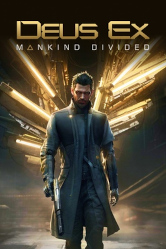
Its a direct sequel to Deus Ex: Human Revolution, in which Adam, who works as the Interpol agent, gets relocated to Prague to join the Task Force 29 and as he leaves the metro station and meets his ally, it gets bombed. After a recovery, he gets tasked to investigate the bombing, since suspiciously, the police are refusing to cooperate.
Story of Mankind Divided is not personal to Adam and is more focused around the bombing and uncovering the conspiracy, and it also gives more attention to the environment and effect The Aug Incident had caused.
Combat was improved, since it gives a bit more non-lethal options and more augs to play with. Also the game has slightly more grounded to reality artstyle (while still remaining a bit cartoonish), which eliminates the minor issue I had with characters in Human Revolution. Same with locations, since I had no issues navigating in Prague at all.
Another thing that Mankind Divided does a great job at is the soundtrack, its so atmospheric and melancholic (except for combat music, which is expected) and the faint "Do you like our owl" quote from Blade Runner that the soundtrack has will still haunt me to this day XD.
While the game does improve upon Human Revolution in many ways, it has one big con, the length. Its not like the game is short, if you'll look into every nook and cranny and do side missions, you'll get about 30 hours of the gameplay (at least it was the case for me and some other people). Its just the main story feels short, since it was split for selling it later if DX:MD will succeed (which was publishers decision and it didn't sell as well as Human Revolution) and that it takes in Prague for 80% of the time.
While its not by any means as great as the original, its still one of my favorites. It feels kinda more closer to the original game, since everything is more grounded and centered on the world around Adam, not on Adam himself (but it still has no balls to take the IRL conspiracy theories and shoehorn them into the game).
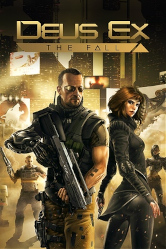
Its a sidequel to Deus Ex: Human Revolution and sequel to Deus Ex: Icarus Effect novel, in which you play as Ben Saxon, the ex-member of Tyrants, who questions the methods of the organisation and betrays them, joining the Juggernaut Collective that opposes The Illuminati. Due to facing the Neuropozine withdrawal, he visited the clinic and was offered a cheaper alternative to Nu-poz called Riezine, which sounds too good to be true, and it is, so he tries to uncover the conspiracy related to this experimental drug.
The story of the game is a huge lackluster, even compared to Invisible War, since its connected to a novel that majority of players haven't read and the game itself was planned to be an episodic game, but since the mobile market had shown no interest in PC/console-like experience on mobile devices, it flopped and the continuation was canned. However, the leaked builds may suggest that it was supposed to be a full game since the beginning.
Gameplay is exactly the same as in Human Revolution, other than the levels are smaller and Ben can't jump (it was probably cut, because it had no purpose in the game), so was the soundtrack and majority of assets the game uses. And its even shorter than Invisible War.
I absolutely have no idea what happened during the development of Deus Ex: The Fall, but I suspect the developers from N-Fusion weren't given enough time to even finish the game, since they had to port the gameplay features of DX:HR into Unity first, and then put everything else into the game. Judging from the build date of the earliest known build, it took them about the year to develop the game and the story data of the earliest build was different, so they have probably rewritten the game's story at some point.
It had a potential to be an okay Deus Ex game (or at least a really great game for iPhone/Android), but its not. While people talk about the Invisible War being bad, The Fall is the real Deus Ex game that nobody dares to mention, since at least Invisible War has some amount of people that find the game to be good (that also includes Austin Grossman, the writer of System Shock and co-writer of Deus Ex).
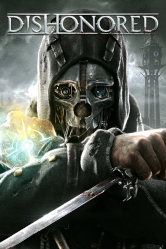
Dishonored takes place in the Empire of the Isles, to be more specific, Dunwall (which is inspired by Victorian Era England), you play as Corvo Attano, The Royal Protector who returns to Dunwall to report to The Empress about the lack of help from other isles with the plague the Gristol isle. Unfortunately, someone has breached the security and as Corvo tried to protect the royal family, The Empress gets murdered, her (and Corvo's) daughter gets kidnapped and everyone puts a blame on Corvo and puts him in the jail. Luckily for Corvo, the secretive organisation of the loyalists sneaked in the key to the cell, letting Corvo escape the prison.
The story of the game is simple, but its been given depth by various lore bits like enviromental storytelling, audiologs, letters, books and dialogues between NPCs, which adds to the immersion.
The gameplay is pretty fun, whether you're trying to be sneaky or killing every corrupt guard on the spot, since to do one of two, you need to put your skills on and upgrade your gear for money, which doesn't cause one option to be better than other. Also the killmoves are gruesome and satisfying (but it may cause the bad ending, if you've killed too many people)
Dishonored has the chaos system, which determines if you'll reach the good, bad or ugly ending. Its justified by the fact that in Dunwall, a lot of people have died to the plague and if you'll kill more people, rats will appear more often and will spread the plague further, since there's nobody who could kill them.
Speaking of skills, Corvo gets marked by The Outsider, the neutral deity, who wants to see what Corvo can do with those powers. Some skills can be useful only for the lethal or loud approach, but the rest can be used in non-lethal or stealthy approach as well, like Blink (which is a short distance teleportation and surprisingly, its not overpowered).
The artstyle of Dishonored is great, the game looks like alive painting, since the textures are handpainted, the soundtrack is also great, fits the depressing aesthetics of London Dunwall pretty well.
Overall, its a really fun game that can be played by both types of people who prefer stealth or prefer gunblazing without any sort of jank in between (I did both playstyles, so I guess I know what I'm saying). While Dishonored is a good successor to Thief series, its also a product that the general masses might enjoy.
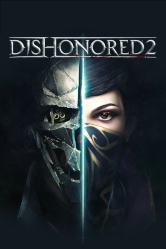
Dishonored 2 is a direct sequel to the first game, where you play as Emily Caldwin, the current Empress of the Isles and daughter of The Empress who died in the previous game (or as Corvo Attano, you have that option too, but the game is clearly about Emily and Corvo is there just as a fan-service) and as you mourn The Empress during the anniversary of her death, Emily's alleged aunt Delilah and The Duke of Serkonos isle come in and overthrow Emily, while Corvo gets turned into a rock. Emily manages to escape to Karnaca, Serkonos, where she starts the investigation about The Duke and Delilah, in order to return the claim to the throne
The sequel improves upon the original, the levels are bigger, there are more lore bits (even the songs written specifically for the game sung by two street musicians), the combat is improved as well (especially the non-lethal approach) and there are two interesting gimmick levels, which I won't spoil.
While the chaos system is there, the plague (this time caused by the bloodflies) is also there, Emily's abilities are not identical to Corvo's, which makes the start of the game a bit unusual, since you have to get used to Emily's abilities (and they're as good as Corvo's).
The artstyle remains handpainted and the soundtrack isn't as depressive, since the game takes place which was inspired by Spain.
While I don't find the game to be as much fun as the original, its a really good sequel that is worth playing.
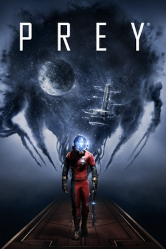
It has nothing to do with the original game from 2006, but here it is. The game is set in the space station Talos I, where after a failed experiment, caused by the breach of alien creatures called the Typhon, most of the personel died. You play as Morgan Yu, the vice-president of TranStar, who agreed to be a test subject for the experimental neuromod, which enhances human abilities and even gives the alien abilites as well. But here's a catch, after removal of the neuromods, the memory returns to the state before the installation of neuromods, which caused Morgan Yu to forget everything that happened after the simulation. Since Morgan knows about that, they made a robot called January, who would remind Morgan who they are and what they're supposed to do.
The game starts with a gender selection, which only changes the voice of January and some minor things like the socks in Morgan's bathroom or the song you'll be able to hear later in the game. The gameplay is close to the System Shock: everyone is dead, your task is to get out and you're on your own from a space station full of enemy creatures.
Said enemy creatures are Typhon, black shapeless aliens and they're separated into a few types, like for example: Mimics, that are small blobs with legs that can shapeshift into random objects and reproduce through eating a corpse. And they potentially might turn someone into a Weaver, the greater Typhon, that is able to create other Typhon creatures, including, but not limited to, Phantoms. Phantoms are humanoid Typhon, that try to mimic humans, but they don't understand what makes humans human.
Despite mostly being unable to perform range attacks, they're still dangerous, since Talos I is not a Citadel Station and they don't have a lot of armed personel or guns. There aren't that many weapons in the game, but there's enough of them to have some kind of purpose.
Since its a successor to both games, it also includes recycling, which is big game changer in Prey, since you're able to recycle any physical props and inventory items with Recycler Charges to gather resources that you can use to craft items, so if you're a loot goblin, you'll always have enough resources to craft the neuromods or ammo. Also you can do a research on your enemies with a Psychoscope, which is a successor to Research skill in System Shock 2. Unlike in System Shock 2, the skills were replaced with a Human abilities and the psi abilities were replaced with Typhon ones, they're less convoluted (like having both Repair and Maintenance as separate skills) and they both can be upgraded from the same menu.
The music in the game is very atmospheric, especially the scripted songs that play when you visit a certain place for the first time or during some moments where someone talks to Morgan. Also during one of the quest, you need to get the voice samples of a certain characters to open the door, and one of the samples is a short, but catchy song sung by that character (which also alerts the Typhon).
The visuals are great, the graphics look really nice and the style of the Talos I was inspired by art-deco. Prey has one problem though, its short. Not when you play it, but when you're following the storyline, like all the survival and side objectives put aside, the main story is short.
Its a really worthy successor to System Shock, to the point that even System Shock remake borrows some things out of it (and does it better than Thief's reboot when it copied some stuff from Dishonored). If you've enjoyed System Shock 2, give Prey (2017) a try, just don't expect it to be exactly to a T like System Shock 2, after all its an its own game.
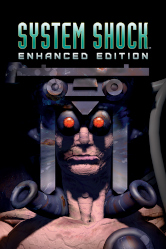
System Shock takes place in 2072, where the hacker breached Trioptimum's security and gathered the confidential info about the Citadel Station's researches. Unfortunately for him, he got arrested by Trioptimum's security forces and taken to the Citadel for a deal: hacker turns off the ethical constraints from station's AI SHODAN and he gets released with the cutting edge cyber implants and potential job in the future. After the 6 months of recovery, the hacker wakes up in the empty station, which was taken by SHODAN and everyone has been turned into a mutant or a cyborg that serves the AI.
The gameplay can be interpreted as "thinking man's Doom", since you have an interface with a lot of stuff going on (not a great design choice, which everyone regrets implementing in, including the man behind its design and code). You have to figure out where to go and what is your objective by listening to the audiologs scattered around the station. When people talk about the game not holding your hand, they probably talk about something like System Shock 2 that does hold the player's hand, but its never System Shock, that tries to kill you instead. The combat is simple, but engaging, enemies drop enough ammo for you to continue killing them. There are also cyber implants (which I've never used, since I forgot about them), which can give you a resistance to the damage you receive.
System Shock has one feature criticized by most of the players and its a Cyberspace. Imagine a simple shooter with 6 degrees of freedom and with everythign rendered in wireframe, thats Cyberspace for ya. I may be a weirdo, but I'm a Cyberspace apologist, I enjoyed it as much as the base game and it wasn't that hard really, since its short and doesn't have a lot of enemies anyway (compared to the remake, where its more action-oriented by redesigning Cyberspace levels and spawning more enemies).
Since its an obscure (but influentual) DOS-era game, not only it plays like an operating system, but it also means that there are no standard control scheme or UI. Unlike in Doom, where devs have made a photoscans of clay sculptures and used a lot of IRL photos for texture base, everything in System Shock is pre-rendered, causing it to look "too cartoonish" (I've also read somewhere that its also related to some technical limitation, but I'm not sure about that).
The soundtrack of the game is weird, but you get used to it and start liking it. And the quality of sound also depends on the sound card (or soundfont if you're playing on a modern PC) and unlike in Doom community, you have to either suffer through the stock one that comes with Windows (assuming you're not Mac or Linux user) or get your own soundfont. I personally have used the ChoriumRevA soundfont and it sounds great with most of the MIDIs that aren't neccessarily System Shock's soundtrack (unless its a Doom soundtrack).
While majority would play the remake or the sequel, I personally enjoyed System Shock more than its sequel, since sometimes, you should keep everything simple, and I just personally prefer the original's pacing, especially with the Enhanced Edition, that give the player an ability to remap the controls and use the mouselook.
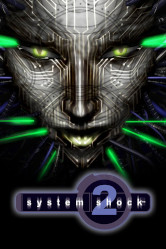
Its a sequel that has nothing to do with the original, but includes some stuff from it (nothing wrong with that, the execution was nice). The sequel takes place after the first game, where you play as the soldier, who was assigned to serve the duty on the UNN Rickenbacker, attached to the starship, with a cutting-edge Faster-Than-Light system, named Von Braun. You wake up after a cryosleep with cyberimplants installed, but with no memory, only to get a message from a survivor that demands the soldier to meet her and get out of here fast. On his way to her, soldier also finds out that the ship was taken over by alien parasites with a hive-mind that calls themselves "The Many", which he has to fight in order to reach the survivor.
The gameplay is a total overhaul over System Shock, focusing more into horror RPG. You have a lot of skills to choose from and psionic abilities to use and upgrade. Your guns can break, so they require maintenance and the ammo is scarce, making the combat even more tense than before. You still have the audiologs, but now you have someone who guides you. Also the Cyberspace was cut and replaced with a hacking mini-game, where you have to connect 3 squares into a line (depending on your skill, squares might not connect and there might be more red squares that you shouldn't press).
Despite being well-received and having a cult-following, the game was a commercial failure, most likely due to bad timing, since multiplayer games like Quake III Arena or Unreal Tournament became more popular (even in Looking Glass Studios offices, people were playing Unreal Tournament over LAN).
Its not really my thing, but I can see why people liked the game so much, though I find some fans to be insufferable bitches that whine about other games being bad (even the original game. If you hate other game, at least show some respect to the OG!).

Its a game-sized mod for Deus Ex (so you need a copy of that), that takes place in gameified Deus Ex forums (kinda like The Matrix or Second Life), in which you play as Trestkon, who just came back to The Forum City after a taking a break. On his arrival, Trestkon was informed that the moderator Deus Diablo was kidnapped and Deus-Ex.org were involved with the bombing of Planet Deus Ex building. Since Trestkon is an agent from the old days and has no alliances with PDX staff yet (that means he doesn't have to spend all day moderating The Forum City), he can do some freelance investigation for PDX. At the same time, WorldCorp Inc. shows some interest in Trestkon with a potential of hiring him for their nefarious tasks.
The gameplay of The Nameless Mod is a slight improvement over Deus Ex, since you can use the fists as your weapon and you can craft molotovs. In addition, there are a few new guns to play with and levels are more detailed than in Deus Ex (in both 2009 and 2.0 releases), while still having that Deus Ex feel, when you're playing them, since there are still multiple approaches and possibilities for box stacking.
Another thing about TNM that impressed me, other than the quality and the content of the mod, is the soundtrack, which was written by a bunch of people with some musical talent, its often memorable and fits the atmosphere of the level. Mod is also fully voiced, either by volunteer voice actors or forum members themselves (they don't neccessarily voice themselves though)
People have complained about the mod being full of inside jokes, but its not really an issue, since you get explained of all inside joke stuff from the get go (most obvious example is the beginning, where you're talking with Phasmatis, one of the moderators). Some jokes haven't aged well, because its a game about mid-2000s Deus Ex forum, but since its a game about mid-2000s forum, its also a nice time capsule that shows what kind of happened in the PDX forums (other than moderator kidnapping or N00BZ faction, it was made up for the mod, obviously. And the Goat and Llama cults were originated from a silly banter in one of the threads), it even has some content from it that may not even be archived (also 2.0 includes the forum itself that you can visit from in-game computers, or at least, what has been archived)
Its a great mod that not only wasn't cancelled, but also has received the major updates that overhaul the mod. If you liked Deus Ex, you should definitely try this mod.
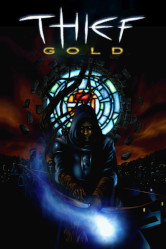
While System Shock had more focus on action, Thief has more focus on stealth. You play as Garrett, a thief, who steals for a living. Over time, as he keeps thieving (he needs to somehow pay his rent after all), he gets involved into something shady, which moves the story to the point, where he needs to stop the evil.
While the story is simple, the game does a great job at explaining it through fantastic noir-esque FMV cutscenes (after all, the game was inspired by an old noir movies) and NPCs talking to each other, which gives the game more depth and makes an illusion of the bigger world that you're in. The voice acting was mostly done by the Looking Glass employees themselves and its pretty good for what it is, except for Garrett, voiced by Stephen Russel (known as Nick Valentine from Fallout 4 and Corvo Attano from Dishonored 2), who did a great job at voicing him.
The gameplay consists of either sneaking past guards and stealing anything that isn't nailed down or exploring the haunted places and looting them. Combat is really simple and useful only against monsters like giant spiders. While fighting against a single guard is a doable chore, it will cause other guards to come and and fight you in groups, which is what you must avoid.
Sneaking requires you to hide in the shadows and watch your step, since different floors have can cause different footsteps sounds that may or may not be loud enough for guards to hear. If you get detected, you can always try for a run and hide somewhere out of guard's reach or fight back (its not really a good option, but if you have managed to kill someone without causing too much noise, you'll have to remove the blood stains by shooting the water arrow at them if you don't want the guards to alert). If you don't like getting spotted, you can always hit enemies from behind in the head with a Blackjack (leather-clad wooden club) or shoot the water arrow at the torch to extinguish it. The game doesn't require you to kill anyone during sneaky missions, so you can skip past your enemies, steal the loot and leave undetected.
The level design is mostly hit or miss, since you have a bunch of great sneaky levels for sneaking (Thieves Guild is not one of them and nobody will chew you out if you'll skip it with cheats) and a bunch of Tomb Raider-esque levels. The atmosphere of Thief's world is pretty unique, since its a weird mix of steampunk, fantasy and medieval that somehow works.
The soundtrack of Thief is not exactly a music, but a bunch of short ambient noises carefully placed on different spots, but they're kinda memorable and they fit in organically. The cutscenes do have some music, which is pretty good, even the intro that screams its from 90s has a great music.
Originally, the game was called Thief: The Dark Project, until the release of Thief: Gold, which added a few levels into the game and edited some older levels. Song of the Caverns is the best level this expansion has to offer (and Thieves Guild is the worst). There's a fan-made patch to remove the Gold exclusive levels, but I'd recommend to keep them and skip Thieves Guild.
I'm not a fan of the genre, but I really liked Thief for what it can offer. Compared to something like original Metal Gear Solid or even modern attempts at stealth like Assassins Creed, Thief feels like a true stealth game, you really need to pay attention to your surroundings, especially the sound, and you don't always have to elimiate your threats, since you're a just a thief. The game is not perfect, but its a really good example of a good stealth game.
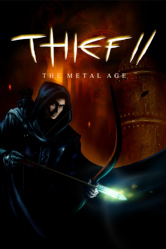
The game continues the story of Garrett by doing something similar to the original, but instead of introducing the player the supernatural forces, the game introduces mechanical forces instead. There are no Tomb Raider-esque levels anymore and all of them are focused on sneaking instead. The levels themselves are not only better, but also bigger.
You also have more stuff you can play around with, like the mechanical eye (which zooms in and out your view) and potions.
The level design is great (most of the time, the final level had the room full of turrets, which was very awful; and one of the final levels was obviously rushed, since they reused the same geometry for two mission and the third floor has a bunch of sloppy brushwork that has remained unfixed), but ambients became less memorable and felt kinda bland, same goes for the music in cutscenes. Another thing that was removed from the sequel are supernatural elements, since its something people have complained, but in my opinion, they weren't bad at all (and I actually prefer them over more steampunky stuff in the sequel).
If it wasn't for a better level design, I could've said that Thief II is kind of a bad sequel. The same atmosphere is gone and I didn't like the story of the sequel as much (and I didn't really like the antagonist of the sequel either, though I appreciate giving some characters from the original more screentime), but I can't really complain, since the new levels are a massive overhaul over the original, there aren't any tomb raiding levels that ruin the pacing and say what you will about Emil Pagliarulo (who butchered Fallout's writing), but his Life of the Party level was very good. Because both Thief games have their own pros and cons, I can't decide which one is better, so I rank them both equally (though I have a bias in favor of Thief: The Dark Project haha).